


Facts:
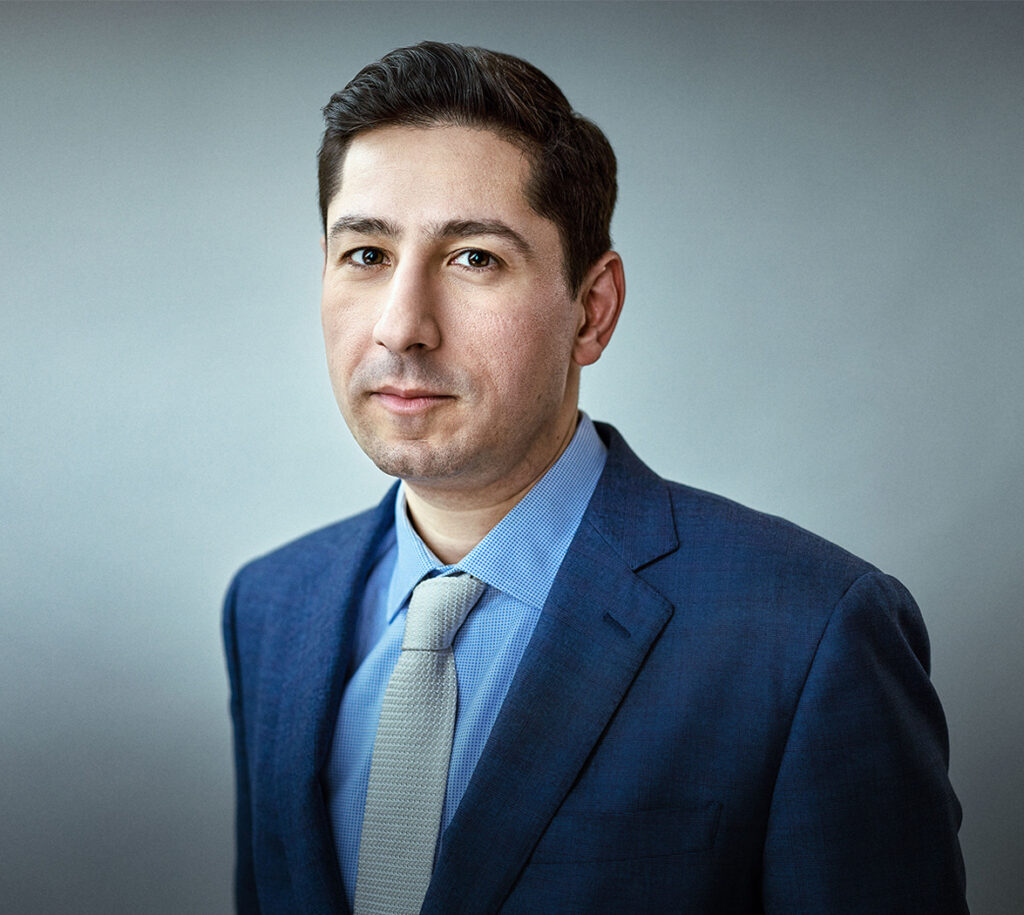
Dr. P is a well-known public figure and author who often wades in on controversial political and social issues. He is also a psychologist and a registered member of the College of Psychologists of Ontario.
Since at least 2018, the College has received complaints about Dr. P’s public statements. In March 2020, following an investigation into some of Dr. P’s statements, the College’s Inquiries, Complaints and Reports Committee (ICRC) expressed concern that “the manner and tone in which [Dr. P] espouses his public statements may reflect poorly on the profession of psychology”. At the time, the ICRC offered Dr. P the following advice: “As a registered Member of the College, and in light of your public profile, you may wish to offer your opinions and comments in a respectful tone in order to avoid a negative perception toward the profession of psychology.”
Dr. P continued making controversial public statements. In 2022, the College received numerous reports about Dr. P’s conduct on social media (where Dr. P identified himself as a “clinical psychologist”) and in public appearances. That conduct included:
- A tweet in which Dr. P responded to someone who expressed concern about overpopulation by saying, “You’re free to leave at any point”;
- A podcast in which Dr. P is identified as a clinical psychologist and spoke about a “vindictive client” whose complaint about him was a “pack of lies”, as well as about air pollution and child deaths by saying, “It’s just poor children, and the world has too many people on it anyways”;
- A tweet in which Dr. P commented that a city councillor using they/them pronouns was an “appalling self-righteous moralizing thing”;
- A tweet in which Dr. P responded to a tweet about an actor being proud to play a transgender character by saying, “Remember when pride was a sin? And Ellen Page just had her breasts removed by a criminal physician”;
- A tweet in which Dr. P commented about a Sports Illustrated Swimsuit Edition cover with a plus-sized model, saying “Sorry. Not Beautiful. And no amount of authoritarian tolerance is going to change that”.
The College Registrar appointmented an investigator to investigate professionalism concerns arising from Dr. P’s conduct. An investigation report was completed and sent to a panel of the ICRC.
The ICRC wrote to Dr. P expressing concern about some of his statements, and explaining that “public statements that are demeaning, degrading and unprofessional may cause harm, both to the people they are directed at, and to the impacted and other communities more broadly.” The ICRC proposed that Dr. P undertake to “reflect on these issues with a period of coaching”, with a person selected by the ICRC, as a remedial step.
Dr. P rejected the ICRC’s proposal, explaining that he had “already implemented a solution” in response to the ICRC’s concerns, which included a “modification of the tone of my approach”. He saw no need for an independent coach selected by the ICRC given that he had people who help him monitor public communications, including his editorial team and his immediate family. He also said it was appropriate for him to identify as a psychologist, given that he is still licensed and still “practising”, albeit in a “diffuse and broader manner” in the public space.
The ICRC did not accept Dr. P’s position. In the ICRC’s view, the “recurrence risk in this case is high and the plan you have proposed in your response does not adequately remediate the risk.” The ICRC recognized that Dr. P’s right to free expression was engaged, but explained that Dr. P “also owes a duty to the public and to the profession to conduct himself in a way that is consistent with professional standards and ethics”. The ICRC once again suggested that Dr. P agree to a period of coaching by an independent professional. Dr. P refused.
The ICRC then released its formal decision and reasons, where it found that through his conduct, Dr. P “may be engaging in degrading, demeaning and unprofessional comments” and that “looked at cumulatively, these public statements may be reasonably regarded by members of the profession as disgraceful, dishonourable and/or unprofessional”. The ICRC was concerned that Dr. P’s conduct “poses moderate risks of harm to the public” including by “undermining public trust in the profession of psychology, and trust in the College’s ability to regulate the profession in the public interest.” The ICRC reiterated that it viewed the recurrence risk as “high”.
The ICRC ordered Dr. P to complete a specified continuing education or remedial program (SCERP) regarding professionalism in public statements, which required him to enter a coaching program with one of two individuals selected by the Panel “to review, reflect on and ameliorate his professionalism in public statements.” The Panel stated that a failure to comply with the SCERP “may result in an allegation of professional misconduct”.
Dr. P brought an application for judicial review.
Decision:
Application dismissed (per Backhouse, Schabas and Krawchenko JJ).
Given that Charter protections are engaged, the Doré framework is applicable here.1 It requires the Court to ensure the administrative decision-maker proportionately balanced the impact on Charter rights and the statutory objectives in a way that gives effect, as fully as possible, to the Charter protections at stake given the particular statutory mandate. But Doré still requires deference. A reviewing court need not agree with the outcome, nor must a decision-maker choose the option that limits the Charter protection the least. The question is always whether the decision falls within a range of reasonable outcomes.
The ICRC’s statutory objective is to protect the public interest and maintain professional standards. It considered the Dr. P’s statements in the context of the applicable professional standards, including the Canadian Code of Ethics for Psychologists, which requires that College members “not engage publicly… in degrading comments about others, including demeaning jokes based on such characteristics as culture, nationality, ethnicity, colour, race, religion, sex, gender or sexual orientation.” It urges members to “strive to use language that conveys respect for the dignity of persons and peoples as much as possible in all spoken, written, electronic or printed communication.” Dr. P’s response to the ICRC recognized that he had made errors in his public communications and claimed that he had already undertaken remediation for his actions.
The ICRC’s concerns relate to the public interest in members of the College avoiding the use of degrading or demeaning language. A regulator’s interpretation of the public interest, based on its expertise, is owed deference. So too is a regulator’s assessment of the risk of harm to the public and to the profession in this case.
With respect to Dr. P’s argument that his statements were “off duty opinions” provided outside his capacity as a clinical psychologist, there are two responses. First, Dr. P’s statements were not made in private conversations, but rather publicly to broad audiences. Such “public statements” are explicitly addressed in the Code. Second, Dr. P presented himself as a clinical psychologist when making the impugned statements and thereafter; for example, his Twitter account states that he is a clinical psychologist, he identified himself as such on the podcast, and he argued in before the ICRC that he sees himself as a clinical psychologist in the broad public space. In any event, “off duty” statements and conduct by regulated professionals can still harm public trust and confidence in their profession.
Turning to the Charter, the ICRC acknowledged Dr. P’s submission that his freedom of expression was implicated, but also noted that as a member of a regulated profession Dr. P is obligated to maintain the professional standards of the College, especially where he identifies himself as a member of the profession. It is clear from the history and context of the proceedings that the ICRC panel was well aware of the importance of the value of free expression and Dr. P’s position on that issue, and appropriately balanced free expression with the College’s statutory objectives. The fact that the ICRC’s decision did not provide a detailed discussion of the value of free expression does not mean the ICRC did not appropriately consider it. Scrutiny of the level of detail in the ICRC’s reasons must take into account that the stakes of the decision are not as high as they are before discipline panels: the ICRC is essentially a screening body that made a remedial order, rather than a disciplinary finding.
By directing a SCERP, the ICRC pursued a reasonable and proportionate option to further its objective of maintaining professional standards, which will have a minimal impact on Dr. P’s freedom of expression. The ICRC’s order does not prevent Dr. P from expressing himself, but rather focuses on concerns about his use of degrading and demeaning language. Dr. P’s arguments that the ICRC failed to consider whether his statements are grounded in fact, or reflect honestly held opinions, miss the point: the concern arises from the nature of the language used.
Commentary:
This case attracted significant public attention on account of Dr. P’s involvement. The result, however, was fairly predictable given the state of the jurisprudence on “off duty” expression by regulated professionals, the modest degree of rights infringement on the facts of this case, and the applicable legal framework for assessing the reasonableness of administrative decisions limiting Charter rights.
When it comes to “off duty” expression, this decision highlights a key factor that will tend to bring such conduct within the purview of a professional regulator: identifying oneself as a member of a regulated profession in connection with the impugned expression. This link between an individual’s status as a professional and the expression at issue can reasonably ground a regulator’s concerns about harm to the reputation of the profession and, by extension, harm to the public interest. In this sense, the outcome in Peterson is consistent with other recent decisions from the Divisional Court. For example, where two registered nurses identified themselves as such and spoke out on social media at a public gathering against masks and vaccines during the COVID-19 pandemic, the Court upheld an ICRC direction that they be cautioned and ordered to attend remedial education through a SCERP.2
In assessing the ICRC decision in this case, the Court adopts a highly deferential posture towards the ICRC panel’s decision, based on reading Doré (and its progeny) and Vavilov together. Such an approach is unsurprising given these authorities, and the nature of the decision at issue and its fairly limited impact on free expression. At the same time, this case perhaps epitomizes one of the main the criticisms levelled at the Doré framework: that it is insufficiently robust to actually take account of Charter infringements, despite the judicial ink spilled in arguing that it is substantively akin to the Oakes test.
Indeed, it is interesting to consider whether the outcome would be different if the Court had applied appellate standards of review, as it would at the conclusion of a disciplinary process (where the professional stakes are higher), rather than the deferential reasonableness posture applied to judicial reviews of ICRC decisions. That was the approach taken by the Saskatchewan Court of Appeal in Strom, a case dealing with “off-duty” public statements that led to discipline findings against a nurse.3 Rather than apply the deferential mode of Doré analysis, the Court of Appeal essentially reviewed the discipline decision on a correctness basis, akin to a fresh Oakes analysis, and found that the findings against the nurse could not stand given the impact on her free expression rights (among other issues). Of course, one cannot discount that the facts in Strom are quite distinguishable from those in Peterson, but the different legal framework — and, in particular, the lack of deference to the initial decision-makers in Strom — certainly played an important role.
The Court of Appeal for Ontario has yet to weigh in on a case involving “off-duty” social media comments by regulated professionals, but that may soon change. Dr. P has announced he is seeking leave to appeal the Divisional Court’s decision.
- Doré v Barreau du Québec, 2012 SCC 12. ↩︎
- Pitter et al v College of Nurses of Ontario, 2022 ONSC 5513. ↩︎
- Strom v Saskatchewan Registered Nurses Association, 2020 SKCA 112. This case was reviewed in Issue No 27 of the newsletter. ↩︎